noBAS Building Re-tuning (BRT)
Building Re-tuning (BRT), as developed, documented and implemented in many buildings by the Pacific Northwest National Lab (PNNL), is an effective set of low- and no-cost measures capable of reducing building energy consumption.
The effective use of BRT requires a building automation system (BAS) that meets minimum requirements, namely one that has:
- Been properly configured and commissioned;
- A prerequisite degree of connectivity to building system sensors; and
- The ability to capture and store building system parameter values measured at regular intervals for an appreciable period, such as two weeks or longer.
However, the significant majority of today’s medium (25,000-50,000 sf) and large commercial/ institutional buildings (>50,000 sf) do not have a BAS that meets these standards, or may not have a BAS at all. To address this segment of buildings, the CUNY Building Performance Lab (BPL) has developed a set of BRT-like measures that use readily-available data loggers and sensors in lieu of a BAS. These instruments are included in defined kits for each measure, along with a notebook computer and/or tablet and associated data management software. The intent is for these measures to be sufficiently accessible and easily reproducible, so that they may be implemented by a broad audience of facility personnel.
CUNY BPL’s solution is referred to as the “noBAS BRT” protocol, and its measures are described in this user guide. Also included are step-by-step instructions to assemble the kits, initialize and install the field equipment, and extract and visualize resulting building system data. Finally, the diagnosis of certain conditions and suggested actions for more efficient building operations are offered for each measure.
Below you can download the one pager measures of the noBAS BRT guide:
Fan Schedule
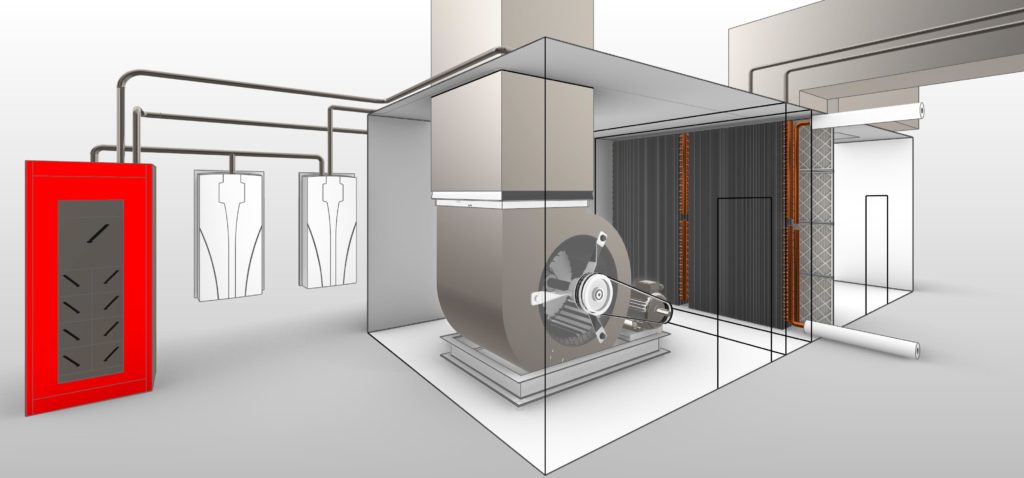
The supply fan status in an air handling unit (AHU) or roof top unit (RTU) is monitored to confirm that the fan(s) is OFF when it should not be operating and ON when it should be on.
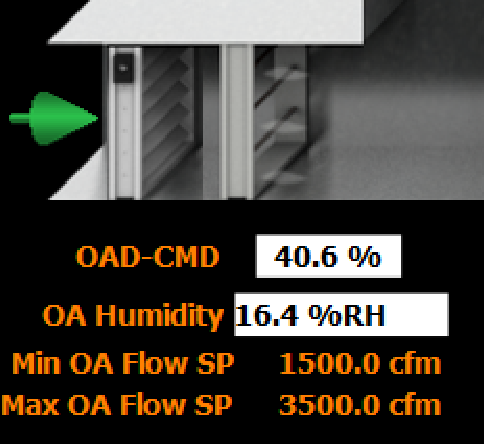
Minimum Outdoor Air Damper (OAD) Position Check
This measure determines whether the minimum OAD position is selected to capture the right balance between healthy indoor air quality (IAQ) during maximum load occupancy and energy efficiency.
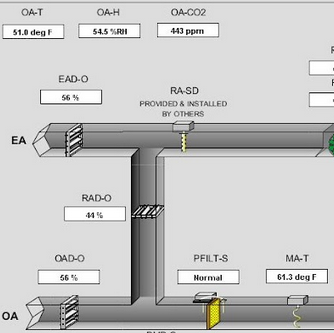
Outdoor Air Control Using Outdoor Air Fraction
This measure can be used to determine whether outdoor air is properly managed. This measure assumes that neither Demand Control Ventilation (DCV) nor Energy / Heat Recovery Ventilation (ERV/HRV) are in use.
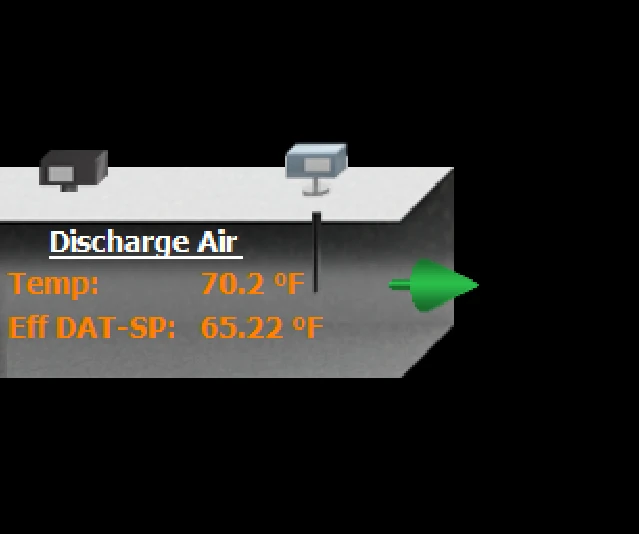
Discharge Air Temperature (DAT) Control
This measure monitors the DAT to determine whether a reset or change in DAT set point can be used to operate more efficiently, thereby preventing excessive DAT hunting, or an inability to reach the DAT setpoint. The DAT reset may be manual and/or be based on the RAT.
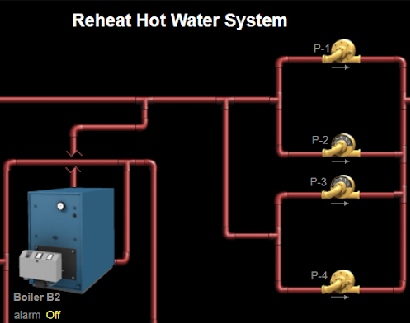
Reheats While Cooling
This measure is best used for a AHU/RTU with multiple zones with reheats. It monitors the MAT, SAT and VAV DAT to check that the SAT is not too low and that the reheats are all on.
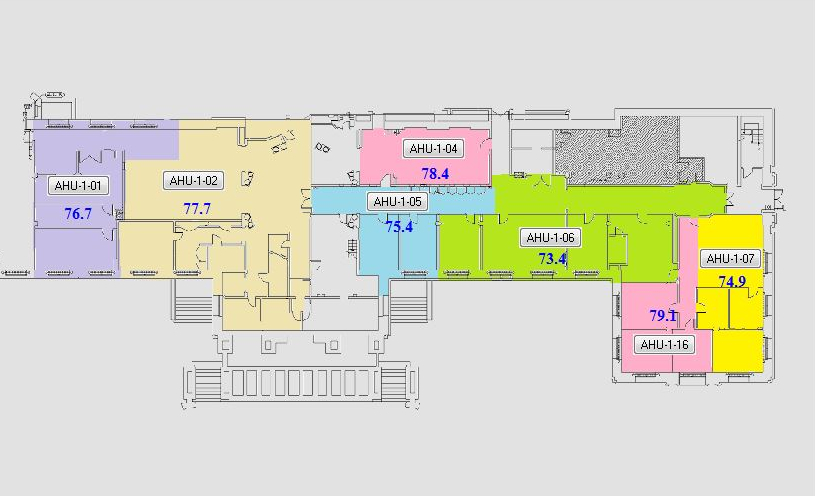
Zone Temperature Setpoint
This measure monitors zone temperature and its setpoint to make sure that the setpoint is met. It is also important to note that if the temperature is meeting its setpoint, that it is not hunting; as well as making sure that it meets the setback, if there is one. The zone temperature should float towards the setback temperature during unoccupied times (when it is shoulder, heating, or cooling season).
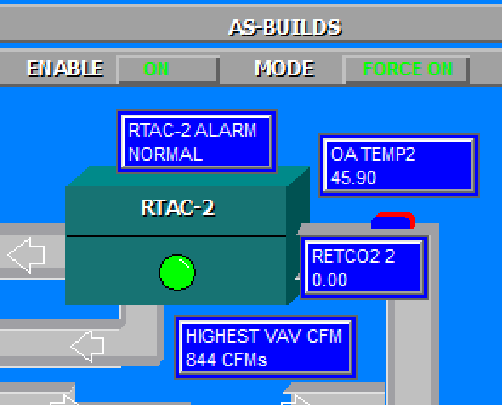
Outdoor Air Temperature (OAT) Verification
This measure monitors zone temperature and its setpoint to make sure that the setpoint is met. It is also important to note that if the temperature is meeting its setpoint, that it is not hunting; as well as making sure that it meets the setback, if there is one. The zone temperature should float towards the setback temperature during unoccupied times (when it is shoulder, heating, or cooling season).